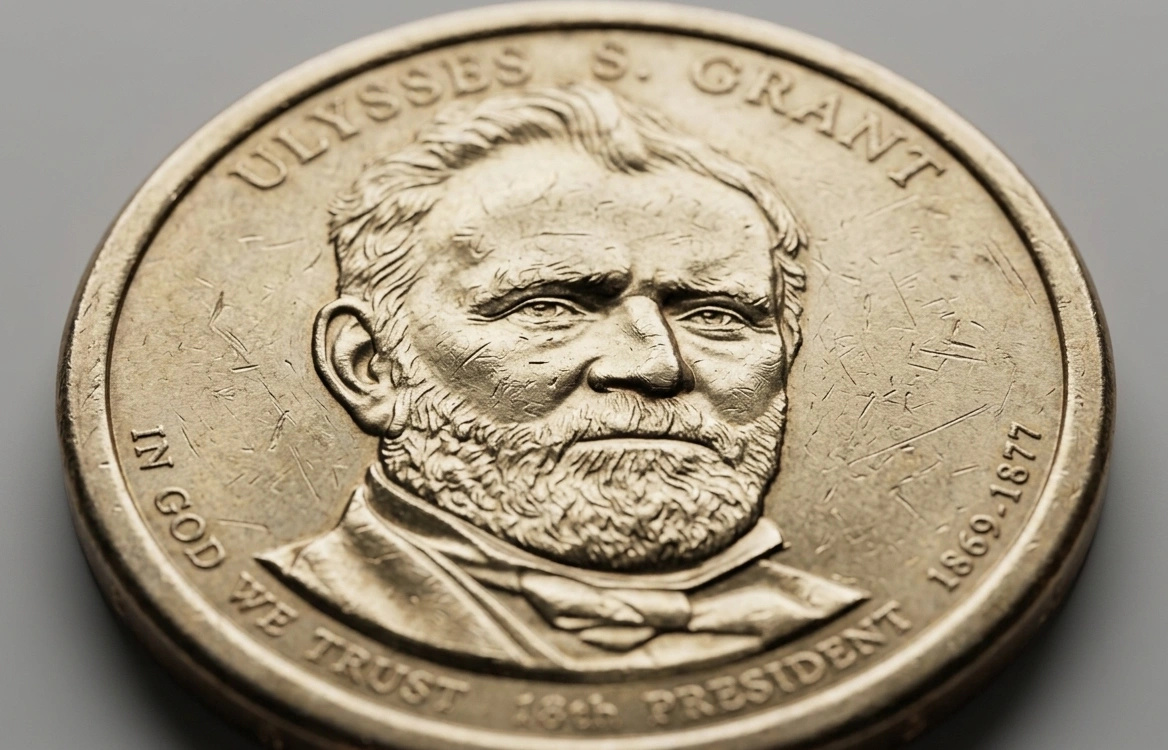
1969 No Mint Mark Quarter Explained Without the Myths
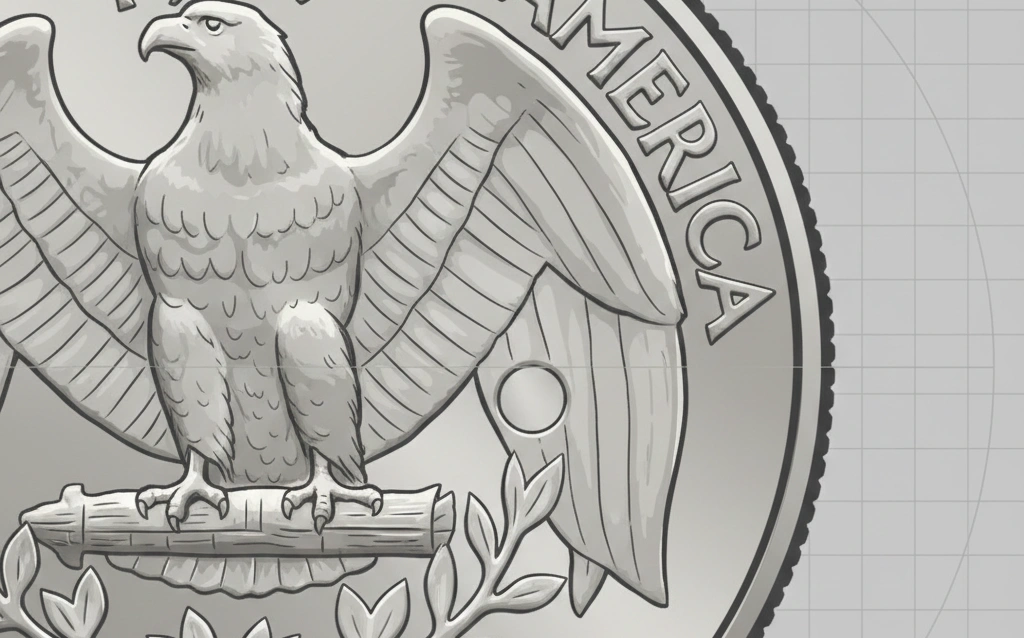
The absence of a mint mark on a 1969 quarter serves as the standard indication of its production at the main facility in Philadelphia.
During the specified period, the Philadelphia Mint did not utilize letter designations for circulation coins of this denomination.
The erroneous interpretation of the missing "P" mark as a rare defect contradicts official United States Mint regulations.
The mintage of this 1969 Quarter No Mint Mark type in Philadelphia reached 176,212,000 specimens.
Debunking Metal Composition Myths
A common misconception regarding the presence of silver in 1969 circulation coins is not supported by technical specifications.
The transition to a copper-nickel clad composition was fully completed by 1965 for all regular issues.
The outer layer represents an alloy of 75% copper and 25% nickel.
The inner core consists of 100% pure copper.
The total weight of the item amounts to 5.67 grams.
A weight deviation exceeding 0.15 grams on the higher side indicates planchet contamination or counterfeiting rather than precious metal content.
Silver quarters were not produced in 1969 in any of the existing strike formats.
Market Value Analysis per Sheldon Scale
The value of 1969 specimens lacking a mint mark is determined exclusively by the degree of surface preservation.
Coins found in circulation are valued at 0.25 US dollars.
Grade | Market Price (USD) | Annual Price Increase (%) |
MS63 | $1 - $2 | 0% |
MS64 | $5 - $10 | +1.5% |
MS65 | $15 - $30 | +3.2% |
MS66 | $50 - $120 | +6.8% |
MS67 | $1,200 - $3,500 | +14.5% |
The sharp price increase when transitioning to MS67 is caused by the critically small number of coins surviving in such condition.
Record Sales and Auction Statistics
Maximum prices for 1969-P coins are recorded at public auctions upon the presence of a PCGS or NGC certificate.
A record price for a coin lacking a mint mark was recorded in 2019 at Heritage Auctions.
A specimen in MS67 condition was sold for 3,840 dollars.
Comparison of prices over a ten-year period shows a 15% drop in the value of mid-grade coins (MS60-MS63) in real terms.
Value growth is observed only in the segment above MS66, where the supply is limited to single certified objects.
Description of Confirmed Varieties
No major systemic errors affecting the mass market were recorded in Philadelphia during 1988.
Existing varieties are isolated in nature, requiring instrumental confirmation.
Doubled Die Obverse (DDO)
Doubling of image elements on the obverse side occurs due to a master die defect.
A minor doubling of the "IN GOD WE TRUST" motto is encountered on 1969 coins lacking a mint mark.
The value of such coins with low defect prominence ranges from 25 to 75 dollars.
Filled Die
The accumulation of manufacturing grease in die recesses leads to faint striking of individual letters.
This phenomenon is considered a defect reducing the numismatic grade of the coin and adds no value.
Investment Risk Assessment
Investing funds into uncertified 1969 quarters is recognized as a high-risk endeavor.
Professional grading costs represent a substantial portion of potential profit.
Laboratory service cost: $25 - $40.
Logistics and insurance expenses: $15 - $25.
Upon receiving an MS65 evaluation, the total certification costs exceed the market value of the coin by 50–100%.
The liquidity of coins lacking a mint mark in grades below MS66 remains at a minimum level.
Rarity Factors and Mintage Survival
According to the free coin identifier, the population of 1969 coins in top quality is extremely limited.
Out of 176 million coins minted in Philadelphia, fewer than 40 pieces are registered in MS67 grade.
Condition | Number Registered (PCGS) | Share of Mintage (%) |
MS65 | ~2,400 | 0.00136% |
MS66 | ~850 | 0.00048% |
MS67 | 38 | 0.00002% |
Statistics confirm the practical impossibility of discovering an investment-grade specimen in modern monetary circulation.
Storage Conditions and Corrosion Prevention
Copper-nickel cladding requires compliance with temperature and humidity regimes.
The surface of a 1969 coin is sensitive to aggressive environments causing mint luster degradation.
Oxidation: Prolonged contact with oxygen forms a dull patina.
Chemical damage: Utilizing albums containing polyvinyl chloride destroys the surface within 3–5 years.
Mechanical contact: Storing coins in bulk leads to "bag marks," reducing the grade below MS65.
The use of inert acrylic capsules is recognized as the optimal preservation method.
Denver and San Francisco Mintages
Understanding the 1969 issue context requires comparison with parallel productions.
The Denver Mint (1969-D) produced 114,372,000 coins, being 35% less than the Philadelphia mintage.
However, Denver coins are more frequently encountered in good condition, making rare Philadelphia specimens more valuable in MS67 grade.
The San Francisco issue (1969-S) was struck exclusively in Proof quality with a total mintage of 2,934,631 sets.
Verification Algorithm
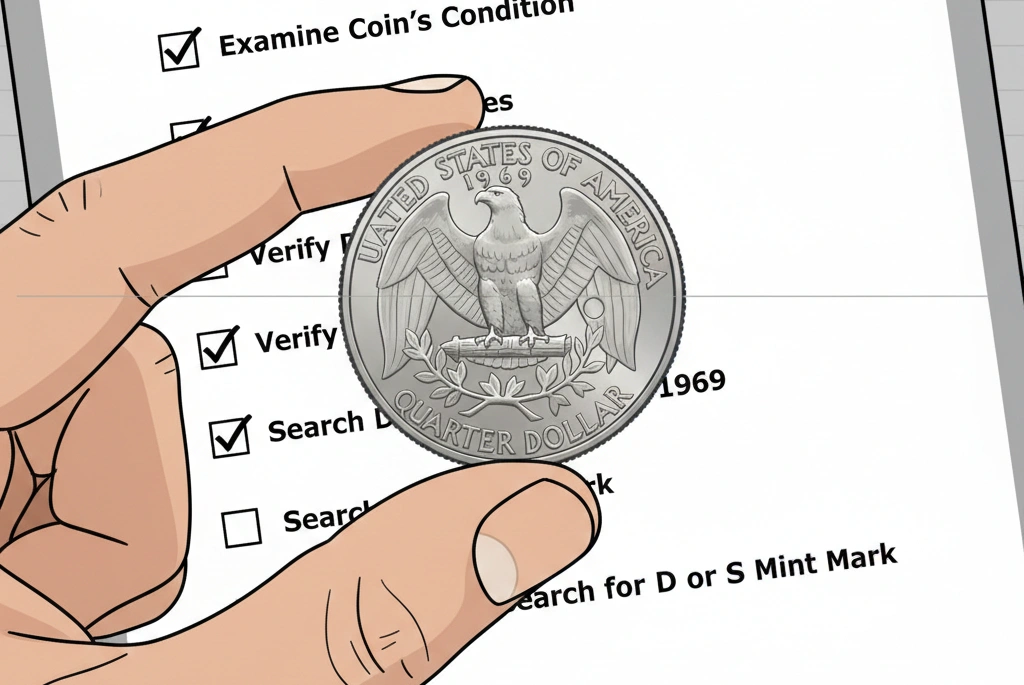
Upon discovering a 1969 coin, a technical examination should be conducted according to the following points:
Exclusion of cleaning traces: The presence of concentric scratches indicates abrasive impact.
Edge check: The absence of a copper stripe on the coin's edge indicates composition falsification that can also be determined with the coin appraisal app.
Luster analysis: An authentic strike possesses a "cartwheel effect" when rotated under a lamp.
Weighing: The mass must stay within 5.67 g ± 0.11 g.
Finding a coin with signs of circulation makes further examination pointless due to the absence of added value.
Registry Sets Market Dynamics
Demand for rare 1969 quarters is formed by Registry Sets participants.
Collectors, striving to occupy top positions in PCGS and NGC rankings, compete to purchase every new MS67 specimen.
This factor maintains prices at a high level, preventing them from falling alongside the general antiques market.
Upon the termination of registry program support, the value of such coins could decrease by 40–60% due to the disappearance of artificial scarcity.
Conclusion
A 1969 quarter lacking a mint mark is a common object of mass production.
The coin's value is driven not by mythical silver or the absence of a letter, but by exceptional physical condition.
Objective auction data confirm the presence of a high premium only for individual specimens having avoided circulation.
Most coins of this year remain ordinary currency units worth 25 cents.